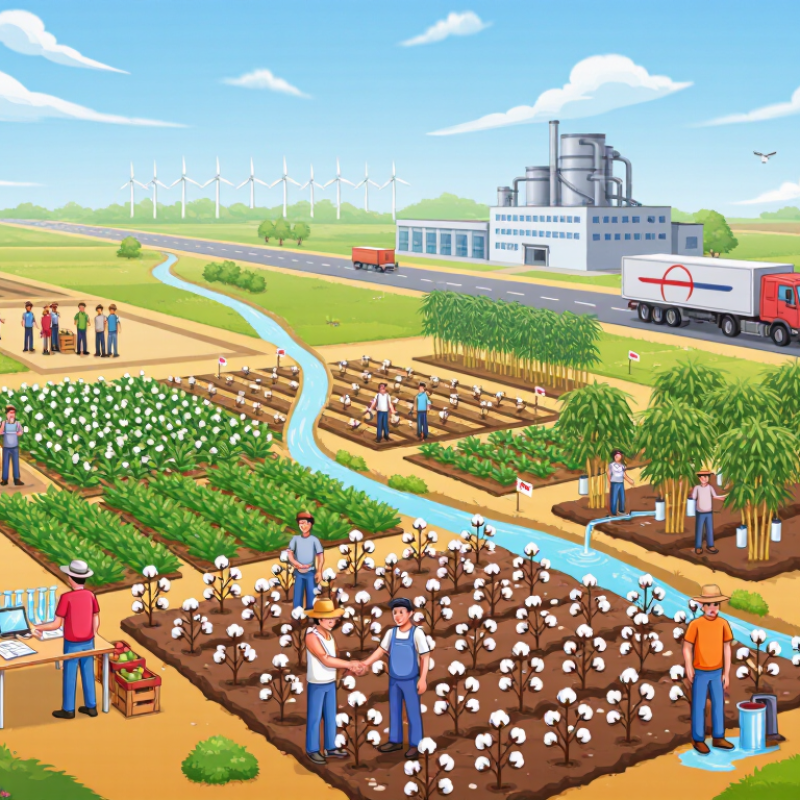
Plant-based materials can reduce pressure on finite resources, but sustainability is never automatic. Cotton, rubber, bamboo, soy, and other crops carry environmental and social risks. Water scarcity, soil exhaustion, habitat loss, and unclear labor conditions may exist behind a polished product label. A credible sourcing strategy must examine the entire journey, from seed and soil to processing, transport, and final use.
To Achieve sustainable sourcing of plant‑based materials, companies need measurable standards and reliable supplier evidence. Start with a practical risk map. Identify growing regions, irrigation needs, land-use changes, and vulnerable communities. Then build direct relationships with farmers, cooperatives, and processors. Field visits can reveal details that spreadsheets miss, such as eroded soil beside a drainage channel or protective equipment left unused. Independent certifications can support verification, but they should not replace local engagement or site-level data. Track indicators such as water intensity, pesticide management, soil organic matter, wage conditions, and supplier corrective actions.
Progress rarely looks perfect. A supplier may provide incomplete farm records, while a smallholder may lack digital tools. That is a real limitation. Ignoring it weakens trust. Companies should disclose gaps, set improvement targets, and review evidence regularly. Pilot projects, farmer training, regenerative practices, and longer purchasing commitments can create practical change. Procurement teams also need purchasing policies that reward verified progress rather than demanding impossible instant results. Sustainable sourcing becomes credible when environmental performance, human well-being, and commercial decisions remain connected over time. Five years of records matter more than one attractive claim.
Scope the Baseline: FAO Attributes 32% of Global Emissions to Agrifood
How to Achieve Sustainable Plant Based Sourcing?
Scope the Baseline: FAO Attributes 32% of Global Emissions to Agrifood
The FAO estimates that agrifood systems create about 32% of global greenhouse gas emissions. This figure includes farming, land use, processing, transport, retail, and consumption. Plant-based sourcing can reduce pressure on land and livestock systems. However, “plant-based” does not automatically mean sustainable.
A credible sourcing plan begins with a measured baseline. Record crop origin, production methods, water use, fertilizer inputs, transport distance, and processing energy. Review emissions across the full product life cycle. A supplier’s certificate may help, but it should not replace farm-level evidence and regular audits.
Small details often reveal larger risks. Look for soil erosion after heavy rain, irrigation drawn from stressed watersheds, or storage losses in hot facilities. Ask whether farmers receive practical support, fair payment, and clear environmental requirements. Traceability should reach the growing region, not stop at the processor.
The baseline will be incomplete.
That is uncomfortable, but useful. Data gaps can expose weak assumptions before they become public claims. Some crops may perform well on emissions yet create local water problems. Others may need more processing energy than expected. Teams should update the assessment each season and publish both improvements and unresolved uncertainties. Reliable sourcing depends on evidence, not attractive labels.
How to Achieve Sustainable Plant-Based Sourcing?
Scope the baseline: agrifood systems generated approximately 16.5 gigatonnes of CO₂-equivalent emissions in 2021, accounting for about 32% of global anthropogenic emissions.
The largest share came from farm-gate activities, followed by land-use change and supply-chain operations. For plant-based sourcing, this baseline supports prioritizing regenerative production, deforestation-free supply, lower-input farming, and efficient processing and logistics.
Source: FAO, “Greenhouse gas emissions from agrifood systems,” 2023. Values shown for 2021; estimates may not sum perfectly due to rounding.
Compare Crop Footprints: Use Poore–Nemecek Land, Water and CO₂e Data
Sustainable plant-based sourcing starts with measuring what each crop demands, not assuming every plant is automatically low impact. The Poore–Nemecek dataset compares land use, freshwater withdrawals, and greenhouse-gas emissions across food systems. Its figures can reveal sharp differences between crops grown for similar uses. A dry pulse may need far less land than a nut crop, while irrigation can change the water picture. Context matters.
A practical sourcing review can place three numbers beside each crop. Track land, water, and CO2e per kilogram. Teams should record whether the crop is rain-fed, irrigated, transported long distances, or processed. On a farm visit, soil cover, pump use, and storage losses provide useful reality checks.
Data meets the field. Not perfectly.
Use these comparisons to guide substitutions, supplier questions, and seasonal purchasing. However, footprint averages are not promises. Regional climate, yields, fertilizer practices, and calculation methods can shift results considerably. Recheck important assumptions with current farm records and transparent lifecycle studies. A lower-CO2e crop may use more scarce water, so one score cannot decide everything. Responsible sourcing means documenting trade-offs, admitting uncertainty, and improving the next purchasing cycle.
Diversify the Basket: FAO Says 75% of Food Comes from Just 12 Crops
How to Achieve Sustainable Plant Based Sourcing?
A frequently cited FAO estimate says 75% of global food comes from only 12 crops. That is a fragile basket. Wheat, maize, rice, and soy dominate many supply chains, while hundreds of edible plants receive limited investment. This concentration increases exposure to drought, disease, soil depletion, and sudden price changes. Sustainable sourcing should therefore expand crop diversity, not simply replace one major ingredient with another.
A practical procurement plan can include pulses, ancient grains, roots, leafy vegetables, and regionally adapted seeds. Buyers should request traceability records, farming location, harvest timing, irrigation information, and soil management practices. Small seasonal trials can test taste, texture, yield, and storage stability before wider purchasing. Local agronomists and independent researchers can help verify these claims. Farmers also need fair contracts and realistic volume forecasts, because diversification fails when producers carry all the risk.
The transition will not be perfectly efficient. Some alternative crops need new equipment, better processing, or consumer education. A crop with a lower water footprint may still travel long distances or produce inconsistent yields. My own assessment would remain cautious: measure land, water, emissions, nutrition, and farmer income together. Do not treat “plant-based” as automatically sustainable. Keep the basket wider, but keep the evidence stronger.
How to Achieve Sustainable Plant Based Sourcing? - Diversify the Basket: FAO Says 75% of Food Comes from Just 12 Crops
A practical view of crop concentration, global production scale and diversification opportunities for plant-based sourcing.
| Crop |
Crop Group |
Approx. Global Production
in 2022 (Million Tonnes) |
Primary Food Uses |
Sourcing Diversification Role |
Strategic Priority |
| Maize |
Cereal |
1,163 |
Flour, grits, starch, sweeteners and snacks |
Maintain regional alternatives and invest in drought-tolerant varieties. |
High concentration risk |
| Wheat |
Cereal |
808 |
Flour, bread, pasta and bakery products |
Blend different wheat classes and diversify origins to manage climate and logistics exposure. |
High concentration risk |
| Rice |
Cereal |
776 |
Milled rice, flour, noodles and cereal ingredients |
Combine rice with millet, sorghum or legumes where product specifications allow. |
High concentration risk |
| Sugar Cane |
Sugar Crop |
1,873 |
Sugar, molasses and food-grade syrups |
Reduce dependence on a single sweetener pathway by evaluating fruit, grain and root-based options. |
High concentration risk |
| Soybean |
Oilseed and Legume |
348 |
Tofu, soy beverages, oil, flour and protein ingredients |
Balance protein sourcing with peas, chickpeas, lentils and fava beans. |
High concentration risk |
| Potato |
Root and Tuber |
375 |
Fresh foods, flakes, starch and frozen products |
Use sweet potato, cassava and other tubers to broaden the raw-material base. |
Medium concentration risk |
| Cassava |
Root and Tuber |
330 |
Starch, flour, tapioca and processed foods |
Offers a tropical-region alternative, subject to processing, cyanide-control and logistics requirements. |
Medium concentration risk |
| Barley |
Cereal |
154 |
Pearled grain, flour, malt and cereal foods |
Can complement wheat in selected bakery, beverage and grain-based applications. |
Medium concentration risk |
| Banana |
Fruit |
135 |
Fresh fruit, purées, powders and snacks |
Support cultivar diversity and source from multiple growing regions to reduce disease risk. |
High concentration risk |
| Sorghum |
Cereal |
63 |
Flour, whole grains, syrup and fermented foods |
A climate-resilient cereal option for reducing reliance on maize and wheat in suitable products. |
Underutilized opportunity |
| Sweet Potato |
Root and Tuber |
89 |
Fresh foods, purées, flour and starch |
Adds color, nutrition and regional flexibility to root-based ingredient portfolios. |
Underutilized opportunity |
| Yam |
Root and Tuber |
88 |
Fresh foods, flour and traditional staple products |
Expands tropical root-crop diversity, with attention to storage and processing capacity. |
Underutilized opportunity |
Key takeaway: A resilient plant-based basket should combine high-volume staples with underutilized cereals, legumes, roots and tubers. This can reduce dependence on a narrow group of crops while improving regional adaptability and supply continuity.
Data note: The widely cited FAO/IPGRI estimate states that approximately 75% of the world’s food supply is generated from 12 plant species. Production figures above are rounded global crop-production estimates for 2022 based on FAOSTAT data; figures are intended for comparative sourcing analysis rather than exact market accounting.
Qualify Suppliers: Require 100% Traceability and No-Conversion Evidence
How to Achieve Sustainable Plant Based Sourcing?
Qualify suppliers before discussing price. Require 100% traceability to the farm or production plot. Each shipment should carry a batch code, origin map, harvest date, and processing record. This turns a broad promise into checkable evidence. Supplier declarations alone are weak. Request land-use records, satellite-based monitoring, and dated no-conversion evidence. The evidence should cover the agreed cutoff date and every upstream supplier.
The need is substantial. FAO’s Global Forest Resources Assessment 2020 reported that agricultural expansion drives nearly 90% of global deforestation. WRI’s Global Forest Review recorded 3.7 million hectares of tropical primary forest loss in 2023. These figures show why plant-based sourcing is not automatically sustainable. A crop can support lower emissions yet still carry land-conversion risk. That tension deserves attention. We may also overestimate the value of a polished certificate.
Tips: Test traceability with a real batch. Ask for one farm polygon, one transport record, and one processing invoice. Compare dates and quantities. Use independent audits, but do not treat audits as permanent proof. Recheck high-risk origins each season. Keep exceptions visible, not hidden in averages. Evidence matters.
A practical qualification score can combine traceability coverage, document quality, conversion risk, and corrective-action speed. Reject unclear records rather than filling gaps with assumptions. Still, perfect visibility is difficult for smallholders and fragmented supply chains. A strict system needs support, training, and realistic improvement deadlines. Otherwise, “100% traceability” may become a slogan instead of an operating standard.
Conclusion
Achieve sustainable sourcing of plant‑based materials by first establishing a clear environmental baseline. Agrifood systems account for approximately 32% of global emissions, so organizations should measure their current Scope 3 impacts before setting improvement targets. Comparing crops through land-use, water-use, and CO₂e data can reveal lower-impact alternatives and support better sourcing decisions. Diversifying the raw-material basket is also essential, especially since around 75% of the global food supply comes from only 12 crops, creating risks for biodiversity, resilience, and supply continuity.
Effective sourcing also depends on supplier qualification and continuous verification. Suppliers should provide complete traceability from origin to processor, along with documented evidence that production has not caused ecosystem conversion. Progress can be monitored through emissions reductions, stronger supply-chain transparency, and efforts to address waste and inefficiency. Tracking performance against the FAO’s 14% food-loss benchmark can help identify practical opportunities to improve resource efficiency while building a more resilient and responsible plant-based sourcing system.

 Herbpro Biotech