Health products are moving beyond basic nutrition toward better daily experiences. In 2026, ingredient selection will shape flavor, aroma, texture, and consumer trust. Consumers may accept a bitter capsule once. They rarely accept it every morning.
This introduction explores ingredients that can Improve taste and sensory properties of health products without weakening their intended benefits. Natural sweeteners, fruit powders, botanical extracts, flavor modulators, and smooth-texture agents each offer practical opportunities. Stevia may reduce sugar, but its lingering bitterness can remain noticeable. Monk fruit can provide sweetness, although supply consistency and flavor balance require careful evaluation. Citrus, berry, cocoa, and vanilla notes can make functional powders feel more familiar. Small sensory changes matter.
Reliable formulation requires more than adding a pleasant flavor. Developers should review clinical evidence, ingredient quality, allergen status, stability data, and regional regulatory requirements. A prototype might taste appealing when freshly mixed, yet become chalky after storage. Heat, moisture, acidity, and mineral content can alter performance. Trained sensory panels, consumer testing, and documented specifications help reveal these problems early.
Some popular ingredients are not universal solutions. Personal preference, dosage, processing method, and product format can change the result. Even experienced formulators may need several revisions. That uncertainty deserves attention, not concealment. The strongest 2026 strategies will combine scientific judgment with practical tasting, transparent sourcing, and honest communication. Better taste is valuable, but it should support product quality rather than disguise poor formulation.
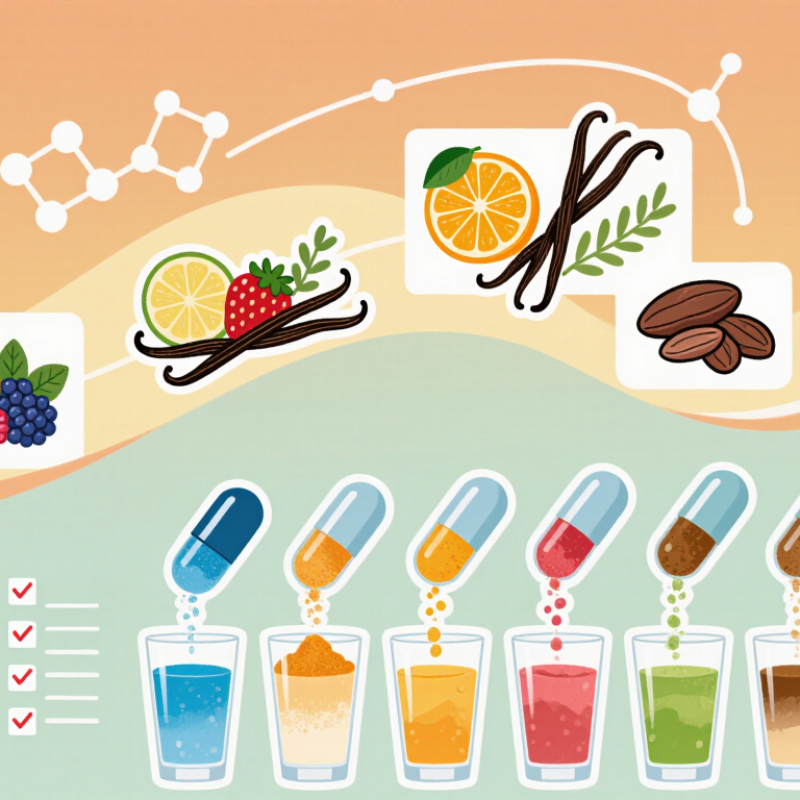
What Makes a Health Product Ingredient Taste Better
2026 Top Ingredients to Improve Health Product Taste
What makes a health product ingredient taste better is rarely sweetness alone. In formulation trials, taste improves when bitterness, acidity, aroma, and texture work together. Natural fruit flavors can soften sharp botanical notes. Small amounts of citrus acid may brighten a dull drink. However, too much acid creates a harsh finish. Taste balance matters more than a single “healthy” ingredient.
Tips: Start with a sensory panel, not personal preference. Test several flavor levels in the finished product. Consider stevia, monk fruit, or sugar alcohols carefully, because each can leave a different aftertaste. Masking agents may reduce bitterness, while soluble fibers can improve body. Check the taste after storage, too. Flavor often changes after heat, light, or mineral exposure.
Reliable development also requires ingredient evidence, safety reviews, and clear labeling. Protein, minerals, herbs, and vitamins can interact in surprising ways. I have seen a pleasant sample become chalky after adding calcium. That result was disappointing, but useful. It showed why tasting only the first prototype is not enough. A better process includes trained evaluators, consumer feedback, and repeated testing under realistic serving conditions. No formula tastes perfect for everyone. The goal is a familiar, stable, and acceptable experience that supports regular use.
Natural Sweeteners for Healthier Flavor Profiles
Natural sweeteners are reshaping health product flavor design. Consumers often expect sweetness without a heavy sugar load. The World Health Organization recommends limiting free sugars below 10% of daily energy intake, with 5% offering additional benefits. For a 2,000-calorie diet, 5% equals roughly 25 grams daily. That benchmark matters.
Steviol glycosides can provide intense sweetness with minimal added sugar. Monk fruit extracts offer a rounded profile, while allulose can improve bulk and mouthfeel. These ingredients are not interchangeable. Stevia may leave a bitter, lingering note. Allulose can create digestive discomfort for some people. “Natural” does not automatically mean healthier.
That distinction requires disciplined formulation. In practical bench testing, blending small amounts of sweeteners often reduces sharpness better than increasing one ingredient. A 2020–2025 Dietary Guidelines report also recommends keeping added sugars below 10% of daily calories. Product teams should measure sweetness, aftertaste, texture, and serving size together. Blind sensory panels can reveal problems that developers miss. Taste still wins.
Data from the WHO guideline and national dietary guidance support lower-sugar recipes, but they do not justify vague health claims. Regulatory definitions differ across markets, especially for extracts, rare sugars, and acceptable wording. Clear labels and verified specifications build trust. The 2024 Food & Health Survey from the International Food Information Council also shows continued consumer attention to sugar and ingredient choices. Yet consumer preference is not clinical evidence. That gap deserves more caution.
2026 Top Ingredients to Improve Health Product Taste - Natural Sweeteners for Healthier Flavor Profiles
| Ingredient |
Primary Natural Source |
Approx. Sweetness vs. Sucrose |
Energy
(kcal/g) |
Digestible Carbohydrate |
Taste and Formulation Profile |
Best Product Applications |
| Steviol Glycosides |
Leaves of Stevia rebaudiana |
Approximately 200–300× |
0 |
0 g |
Very high intensity with a possible lingering or licorice-like note. Purity and glycoside composition strongly affect flavor quality. |
Reduced-sugar beverages, powdered drink mixes, dairy alternatives, gummies and nutrition products. |
| Monk Fruit Extract |
Monk fruit, also called Siraitia grosvenorii |
Approximately 100–250× |
0 |
Usually 0 g in purified extracts |
Clean, rounded sweetness, although some extracts may have mild fruity, caramel or lingering notes. |
Functional beverages, protein powders, bars, sauces and low-sugar snack formulations. |
| Erythritol |
Fermented glucose from plant-based starch sources |
Approximately 60–80% |
0.2 |
Very low; mostly excreted unchanged |
Clean sweetness with a noticeable cooling sensation, useful for improving freshness but potentially distracting at high levels. |
Tabletop sweeteners, baked goods, chocolate-style products, drink powders and sugar-reduced confectionery. |
| Xylitol |
Fibrous plant materials such as birch and corn cobs |
Approximately 90–100% |
2.4 |
Low; incompletely absorbed |
Sucrose-like sweetness with a cooling effect. Excessive intake may cause gastrointestinal discomfort in sensitive individuals. |
Oral-care products, chewing gum, mints, sugar-reduced confectionery and selected baked goods. |
| Allulose |
Rare sugar found naturally in small amounts in fruits such as figs and raisins |
Approximately 70% |
0.4 |
Very low; minimally metabolized |
Sugar-like taste and useful browning, bulk and freezing properties. High intake may cause digestive discomfort. |
Baked goods, frozen desserts, sauces, reduced-sugar beverages and nutrition bars. |
| Honey |
Floral nectar processed by honeybees |
Approximately 80–90% |
3.0 |
Approximately 82 g/100 g |
Distinct floral, fruity and caramel notes. Color and flavor vary by floral source and processing. |
Tea and beverage concentrates, nutrition bars, sauces, dressings and bakery products. |
| Maple Syrup |
Concentrated sap from maple trees |
Approximately 60–70% |
2.6 |
Approximately 67 g/100 g |
Smooth caramel, toasted and woody notes that can mask bitterness in some botanical and protein formulations. |
Breakfast products, snack bars, bakery items, sauces and premium beverage applications. |
| Date Syrup |
Pressed and concentrated dates |
Approximately 60–80% |
Approximately 2.7–3.0 |
Typically 65–75 g/100 g, depending on concentration |
Rich dried-fruit, caramel and molasses-like flavor with useful color and viscosity. |
Energy bars, smoothies, bakery fillings, sauces and plant-based desserts. |
| Coconut Sugar |
Sap of the coconut palm flower |
Approximately 90–100% |
Approximately 3.7–4.0 |
Approximately 90–95 g/100 g |
Mild caramel and toasted flavor with a granular texture. It remains a caloric sugar and should not be treated as calorie-free. |
Baked goods, granola, snack bars, hot cereals and products seeking a less-refined sugar profile. |
Data note: Sweetness, energy values and carbohydrate content are approximate and may vary by purity, moisture, processing method and formulation. Sugar alcohols and rare sugars may cause gastrointestinal discomfort when consumed in large amounts. Honey should not be given to infants under 12 months of age. Natural sweeteners containing caloric sugars still contribute to total sugar and energy intake.
Botanical Flavors That Enhance Product Appeal
2026 Top Ingredients to Improve Health Product Taste
Botanical Flavors That Enhance Product Appeal
Botanical flavors can make health products feel more familiar, especially when bitter ingredients dominate the formula. Citrus peel, ginger, mint, hibiscus, and rosemary offer recognizable aromas and layered taste. Their character can turn a sharp first impression into something brighter and more balanced.
In product development, flavor selection should match the delivery format. Ginger may suit a warm shot, while mint can refresh a powdered drink. Hibiscus adds tartness and a deep red tone, but its acidity may need careful adjustment. Citrus notes can lift the aroma, yet they may fade during storage. Small sensory trials matter.
Taste testing reveals details that ingredient labels cannot. A sample may smell inviting but finish dry, medicinal, or overly sweet. Experienced panels can compare aftertaste, mouthfeel, and flavor strength at realistic serving sizes. Formulators should also check botanical identity, purity, allergen information, and applicable regulatory requirements.
Botanicals are not automatic solutions. They can introduce new problems. For example, rosemary may overpower delicate formulas, while mint can create a cooling effect some users dislike. Natural extracts also vary between batches, so consistent sourcing and quality checks remain essential. The best flavor is rarely the loudest one; it supports the product’s purpose without hiding its character.
Texture-Improving Ingredients for Better Mouthfeel
In 2026, improving texture is central to making health products easier to enjoy. A pleasant mouthfeel can reduce the chalkiness of powders and the dryness of high-fiber formulas. Soluble fibers, such as acacia fiber and inulin, can add gentle body without creating a heavy finish. Pectin may provide a soft, clean structure in drinks and chewable products. Too much can make the product thick or sticky. Less is often better.
Hydrocolloids, including xanthan gum and guar gum, help stabilize beverages and create a smoother flow. They can also prevent gritty particles from settling at the bottom of a glass. Modified starches may deliver a fuller texture in meal replacements and nutrition blends. Lecithin can improve dispersion, especially when formulas contain oily nutrients. However, each ingredient changes hydration, viscosity, and flavor release. A smooth gel can still feel artificial.
Practical testing remains essential. Formulators should evaluate texture at different temperatures and after realistic storage periods. Sensory panels can describe coating, slipperiness, graininess, and afterfeel more accurately than instruments alone. Our early trials often looked successful until testers noticed a dusty finish. That feedback changed the formula. It is also important to review permitted use levels and labeling requirements in each target market. Texture ingredients should support the product, not hide poor mixing or excessive sweetness.
How to Select and Test Taste-Enhancing Ingredients in 2026
2026 Top Ingredients to Improve Health Product Taste
How to Select and Test Taste-Enhancing Ingredients in 2026
Taste improvement starts with the product’s main problem. Is it bitterness, metallic flavor, dryness, or lingering sweetness? Common options include citrus acids, mineral salts, natural flavor extracts, sweeteners, and bitterness-masking agents. Each ingredient changes mouthfeel differently. A sharp acid may brighten a drink but increase stomach discomfort for some users. A masking agent may reduce bitterness while creating a heavy aftertaste.
Use a small screening matrix before making a larger batch. Test three dosage levels, then record bitterness, sweetness, aroma, texture, and aftertaste separately. Keep the base formula unchanged. This prevents misleading results. A trained sensory panel can identify differences, while ordinary consumers can show whether those differences matter. Both groups are useful.
Start with low concentrations.
Check pH, stability, solubility, and ingredient interactions during testing. Heat, light, and storage time can change flavor performance. Review specifications, safety data, and local food regulations with a qualified food technologist. Do not assume “natural” means suitable for every formula or consumer. In product trials, early winners sometimes fail after two weeks of storage. That was frustrating, but informative. Taste testing should also include realistic serving sizes and preparation methods. A sample that tastes excellent in a small laboratory cup may perform poorly in a full bottle. Record every change, including mistakes.
2026 Top Ingredients to Improve Health Product Taste
Approximate sweetness intensity of commonly used taste-enhancing ingredients compared with sucrose, where sucrose = 1. Values represent typical published ranges and should be verified in the final product matrix.
Steviol glycosides, sucralose, acesulfame potassium, monk fruit extract, and aspartame provide high sweetness at low use levels. During selection, test sweetness, bitterness, lingering aftertaste, acidity, and compatibility with proteins, minerals, botanical extracts, and active ingredients through blinded sensory trials.
FAQS
Better taste comes from balancing bitterness, acidity, aroma, sweetness, and texture. Sweetness alone rarely solves the problem. A fruit flavor may soften a sharp botanical note. Too much acid can leave a harsh finish.
Describe the issue clearly. It may be bitterness, metallic flavor, dryness, or lingering sweetness. Taste the finished product, not only individual ingredients. Start small.
Common choices include citrus acids, natural flavor extracts, sweeteners, mineral salts, and masking agents. Soluble fibers may improve body and reduce a thin texture. Each option can create a different aftertaste.
Use a small screening matrix with three dosage levels. Keep the base formula unchanged. Record sweetness, bitterness, aroma, texture, and aftertaste separately. This makes comparisons more useful.
Yes. Trained evaluators can detect small differences. Ordinary consumers show whether those differences matter during normal use. Both groups provide valuable, but imperfect, evidence.
Heat, light, minerals, and time can change flavor performance. A pleasant sample may become chalky after storage. That happened in one trial. It was disappointing, but informative.
Check pH, stability, solubility, ingredient interactions, and realistic serving sizes. A drink that tastes good in a small cup may fail in a full bottle. Preparation method matters too.
No. Natural ingredients can still create strong flavors, interactions, or safety concerns. Review specifications, safety information, and local food requirements. Clear labeling remains important. Perfect taste is unlikely.
Conclusion
In 2026, improving the taste of health products will depend on balancing flavor, nutrition, texture, and consumer expectations. Effective formulations may combine natural sweeteners with carefully selected botanical flavors to create pleasant, recognizable, and well-rounded flavor profiles without overwhelming the product’s nutritional purpose. Ingredients should be chosen for their compatibility with the formula, stability during processing, and ability to support a clean and enjoyable sensory experience.
Texture also plays an important role in acceptance. Fibers, emulsifiers, and other texture-improving ingredients can help create smoother, creamier, or more consistent mouthfeel while reducing unpleasant sensations such as grittiness or excessive thickness. To Improve taste and sensory properties of health products, developers should use a structured testing process that evaluates sweetness, aroma, aftertaste, texture, and overall consumer preference. Small-scale trials, sensory panels, and stability checks can help identify the most effective ingredient combinations for safe, appealing, and high-quality products.

 Herbpro Biotech